

 简体中文
简体中文
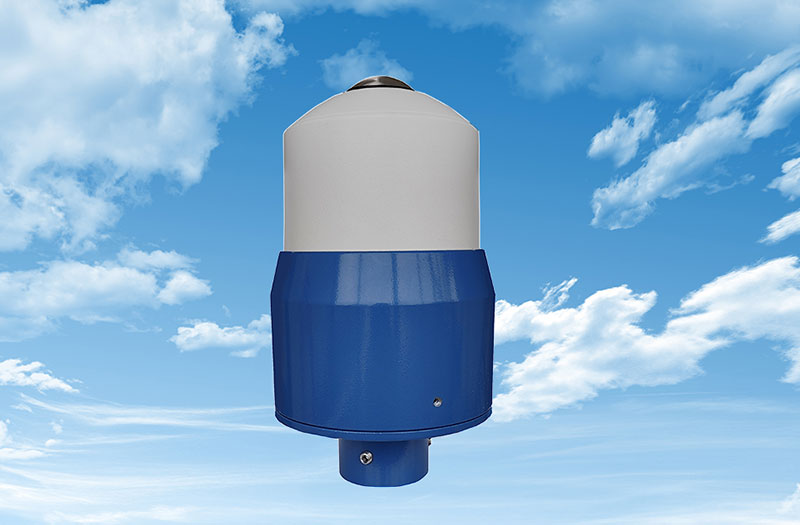
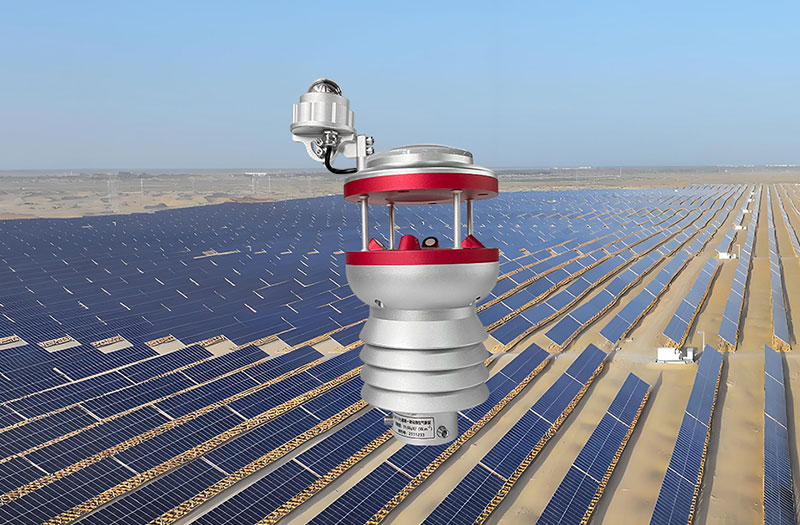
TWS-4B Meteorological Station Solution
- Date:12/05/2025/
- Source:
- Author:
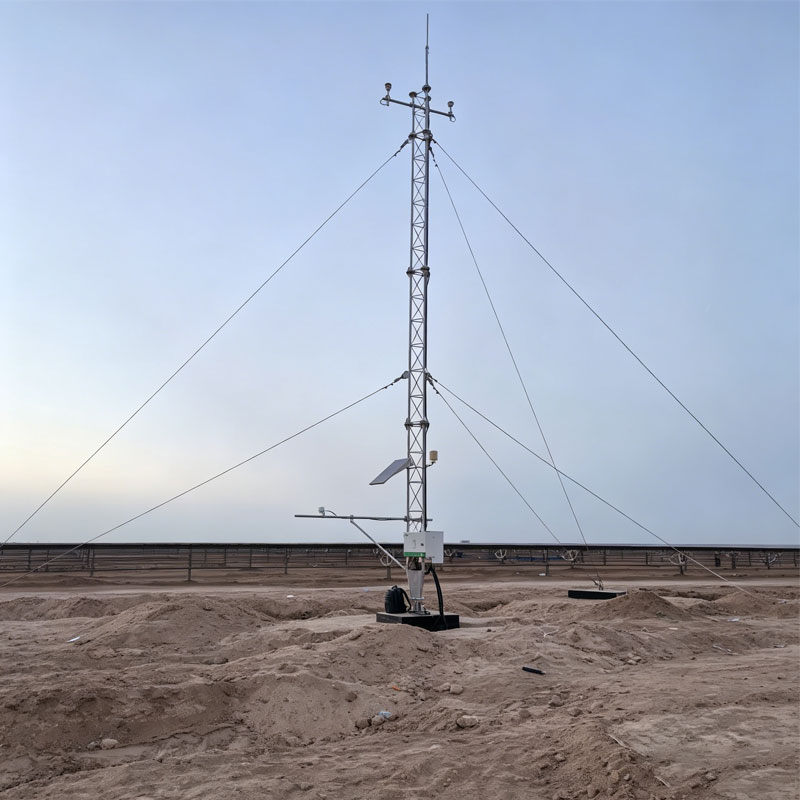
Weather conditions directly impact the power generation of photovoltaic power plants. Accurate meteorological data and solar irradiance measurements are core parameters for evaluating plant performance and essential for monitoring, assessing, and controlling operational efficiency. To address the needs of site selection, operation and maintenance management, scientific research, and fault prediction in photovoltaic systems, Dongguan MC New Energy Technology Co.,LTD has developed the TWS-4B automatic weather station, leveraging over 19 years of expertise in developing meteorological and solar resource monitoring equipment to provide high-precision data support throughout a plant's entire lifecycle.
I. Project Background & Requirements
Weather conditions directly impact the power generation of photovoltaic power plants. Accurate meteorological data and solar irradiance measurements are core parameters for evaluating plant performance and essential for monitoring, assessing, and controlling operational efficiency. To address the needs of site selection, operation and maintenance management, scientific research, and fault prediction in photovoltaic systems, Dongguan MC New Energy Technology Co.,LTD has developed the TWS-4B automatic weather station, leveraging over 19 years of expertise in developing meteorological and solar resource monitoring equipment to provide high-precision data support throughout a plant's entire lifecycle.
II. Product Overview
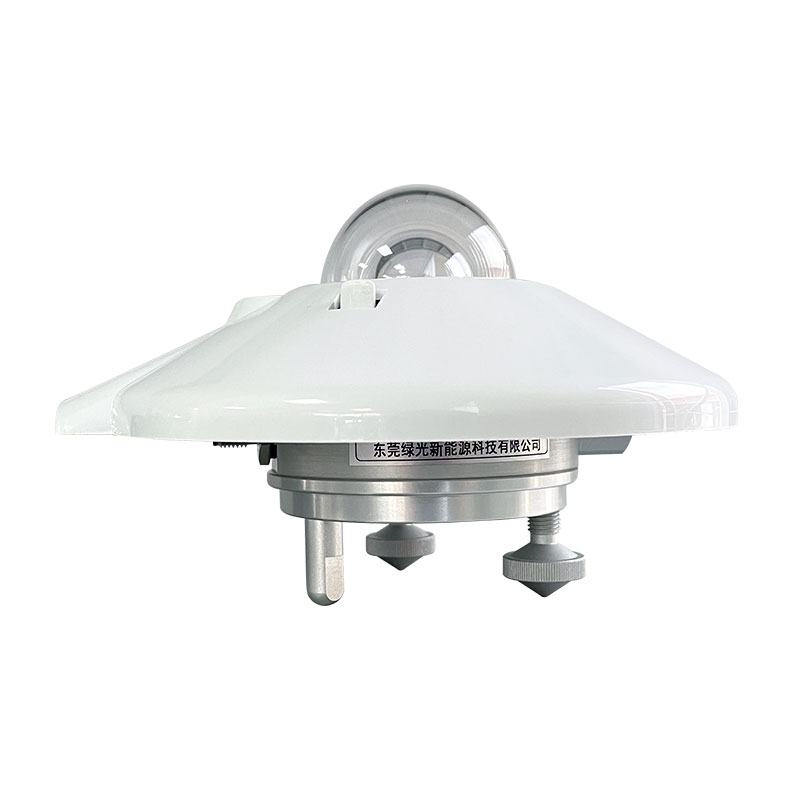
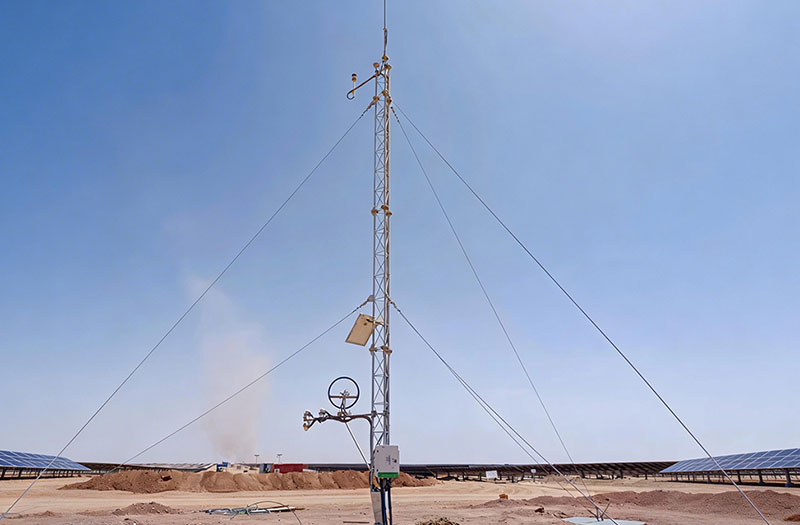
The TWS-4B automatic weather station is a high-precision, highly reliable, maintenance-free integrated meteorological observation system compliant with international standards such as IEC 61724-1:2017 and ISO 9060:2018. It employs a high-precision FSP10 solar radiation sensor (equivalent in accuracy to the Kipp & Zonen CMP21 second-class standard total radiometer), capable of measuring key parameters including ground-level solar total irradiance (GHI), panel array plane irradiance (POA), and scattered irradiance (DHI). The system also integrates monitoring capabilities for wind speed, wind direction, temperature and humidity, rainfall, and dust levels, making it suitable for monitoring needs across photovoltaic power plants of various scales.
III. Core Advantages
High precision and stability: Equipped with a solar radiation sensor compliant with ISO 9060:2018 Class A standards, featuring ideal cosine response characteristics, rapid response (95% response time <2 s), and broad temperature adaptability. Its measurement accuracy matches that of internationally certified equipment, significantly reducing photovoltaic power plant measurement costs.
Durable environmental performance: The stainless steel chassis meets an IP65 protection rating, while the quick-connect waterproof plug achieves IP68 certification, enabling round-the-clock operation in temperatures ranging from-55
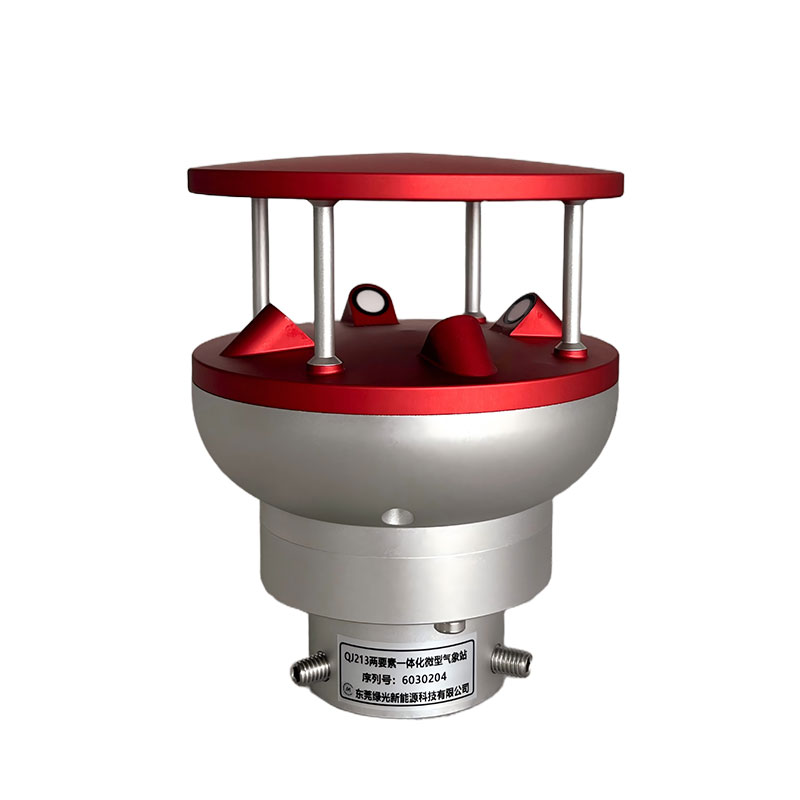
Smart integration and flexible scalability: The system integrates the QJ213 ultrasonic wind speed and direction sensor (range 0
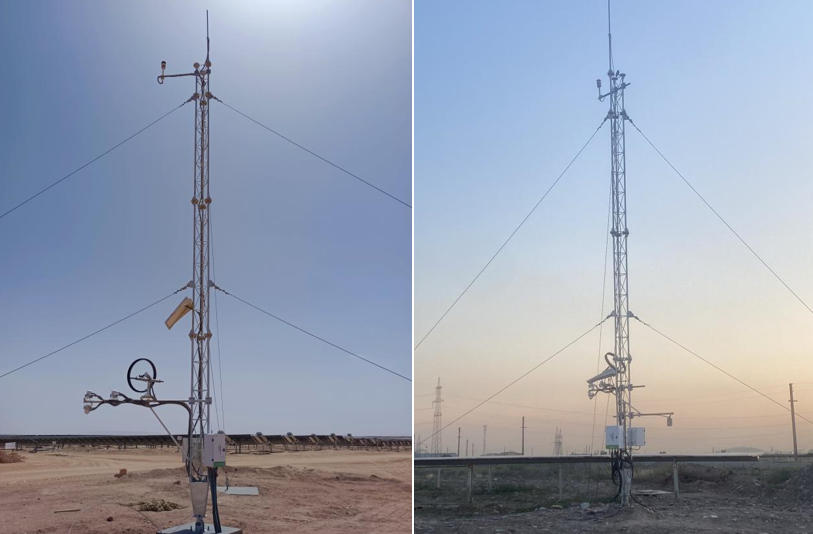
Easy deployment and maintenance: Supports various installation methods including wind towers and wind poles; its sensor module design ensures maintenance-free operation. The MC1000 data collector supports the Modbus protocol, enabling remote data acquisition and export in CSV format, compatible with power plant SCADA systems.
IV. Technical Solution Details
1.Core Monitoring ParametersCore Monitoring Parameters
Radiation types: Total horizontal radiation (GHI), Total oblique radiation (POA), Scattered radiation (DHI), Direct radiation (DNI); resolution ≤ 1 W/m².
Environmental parameters: wind speed (0–65 m/s), wind direction (0–360°), ambient temperature (-50 to 105°C with ±0.05°C accuracy), humidity (0–100% RH), and rainfall (0.1–310 mm/h).
Special Category: Component temperature (-30 to 135°C), dust index (SR value, ±1% accuracy).
2. System Configuration
Small-scale power stations (<5 MW): 1 solar radiation sensor, 1 environmental sensor, and 1 data collector;
Large-scale power plants (≥500 MW): Increase the number of sensors proportionally to the plant's size to ensure comprehensive monitoring coverage.
V. Application Scenarios
Photovoltaic power plant site selection: Assess resource potential using long-term radiation data and calculate the internal rate of return (IRR).
Operation and maintenance management: Monitor dust coverage and component temperatures, develop scientific cleaning schedules to minimize power generation losses.
Power Prediction: Provides high-precision meteorological data for optical power prediction systems to enhance accuracy.
Scientific Research Evaluation: Supports studies on photovoltaic module efficiency degradation and environmental impacts.
VI. Service & Support
The system is certified under ISO 9001:2015 and offers 24/7 technical support (hotline: 400-8834-913). With an average Mean Time Between Failures (MTBF) exceeding 10 years and free repairs during the warranty period, it ensures long-term stable operation.
The TWS-4B automatic weather station is designed around the principles of "high precision, strong adaptability, and easy maintenance," providing standardized meteorological data solutions for the entire lifecycle management of photovoltaic power plants, thereby enhancing power generation efficiency and investment returns.