

 简体中文
简体中文
MCASI-16 ALL-Sky Imager Solution
- Date:12/05/2025/
- Source:
- Author:
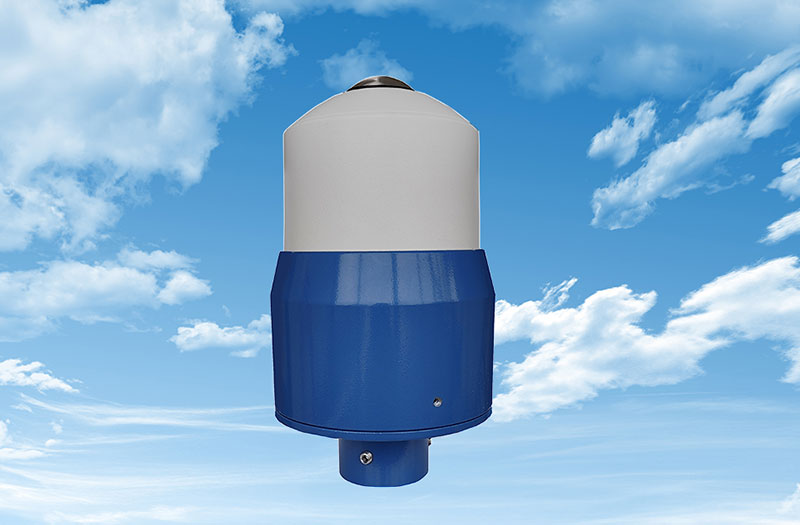
The MCASI-16 All-Sky Imager (also known as the Automatic Cloud Measurement Instrument) is a next-generation precision meteorological observation device developed by Dongguan MC New Energy Technology Co.,LTD. Integrating technologies from optics, remote sensing, and signal processing, it is specifically designed for all-sky cloud condition monitoring. Utilizing high-performance edge computing, the system performs real-time analysis of cloud feature characteristics and weather types while offline processing handles ground-based cloud image acquisition, storage, and analysis. Results—including cloud images, cloud cover values, and weather categories—are transmitted to the central station, providing data support for backend power forecasting systems or station SCADA systems. This product replaces manual cloud measurement methods, ensures objective observation results and continuous data availability, significantly enhances observation quality and efficiency, and meets diverse precision meteorological observation requirements across various scenarios.
I. Product Overview
The MCASI-16 All-Sky Imager (also known as the Automatic Cloud Measurement Instrument) is a next-generation precision meteorological observation device developed by Dongguan MC New Energy Technology Co.,LTD. Integrating technologies from optics, remote sensing, and signal processing, it is specifically designed for all-sky cloud condition monitoring. Utilizing high-performance edge computing, the system performs real-time analysis of cloud feature characteristics and weather types while offline processing handles ground-based cloud image acquisition, storage, and analysis. Results—including cloud images, cloud cover values, and weather categories—are transmitted to the central station, providing data support for backend power forecasting systems or station SCADA systems. This product replaces manual cloud measurement methods, ensures objective observation results and continuous data availability, significantly enhances observation quality and efficiency, and meets diverse precision meteorological observation requirements across various scenarios.
II. Design Basis and Implementation Standards
Developed leveraging Dongguan MC New Energy Technology Co.,LTD over 19 years of expertise in meteorological equipment R&D, this product strictly adheres to the ISO 9001:2015 quality management system standards and complies with industry specifications for meteorological observation and solar resource monitoring. Its core technology holds CE certification, ensuring accurate, reliable, and compliant observational data suitable for professional research and engineering applications.
III. Functional Features
Comprehensive, blind-spot-free monitoring: The visible light field of view (horizontal, vertical, and diagonal) exceeds 180°; the ultra-wide-angle lens provides 360-degree coverage without sun obstruction, fully capturing cloud conditions across the entire sky.
Intelligent Precision Analysis: Equipped with the TWS-AI-01 Meteorological Super Brain, it employs computer vision and deep learning technologies to achieve cloud observation accuracy of ≥95%, supporting simultaneous analysis using four algorithms.
All-weather reliable performance: With an IP66 protection rating, it features waterproofing, fog resistance, deicing capabilities, and lens heating, making it suitable for harsh outdoor conditions and enabling uninterrupted 24-hour observation.
Low power consumption and easy deployment: The device's total power consumption in non-heated mode is ≤10 W, featuring compact size and lightweight design for convenient field installation and maintenance.
Flexible communication and storage: Supports multiple protocols including MODBUS TCP/RTU and MQTT, features Ethernet and RS485 interfaces, and enables NAS network storage as well as FTP data upload.
Remote Intelligent Management: Connects to the network for remote operation and monitoring of devices, supporting automated tasks such as screenshot scheduling and sleep-wake cycles.
IV. Application Areas
Meteorological and climatic services: Automated real-time cloud cover monitoring provides fundamental data for weather forecasting;
New Energy Sector: Solar capacity forecasting and performance evaluation of photovoltaic power plants to support efficient operation and maintenance.
Scientific Research Exploration: Meteorological science research, application of telemetry technology, and solar energy resource surveys;
Transportation and Shipping: Precision meteorological monitoring via aviation and maritime vessels ensures travel and navigation safety.
V. Basic Configuration
Core imaging unit: a 1/1.7" line-by-line scanned CMOS sensor with visible light imaging channels, featuring a photosensitive chip resolution of ≥4000×3000;
Intelligent Analysis Unit: TWS-AI-01 Weather Super Brain, equipped with built-in cloud image recognition and weather type analysis software;
Communication storage module: features 2 RJ45 adaptive Ethernet ports and 1 RS485 interface, supporting NAS network storage.
Auxiliary functions: lens heating, device heating module, high-pressure air duct condensation prevention system, and built-in bird-repellent speaker.
Basic components: power supply cable, mounting bracket, product manual, and certificate of conformity.
VI. Optional Configurations
Algorithm Upgrade: The AI Open Platform provides customized algorithm training and model import services;
Communication Enhancement: A 4G wireless communication module ensures stable data transmission in remote areas.
Energy Storage Power Source: A portable solar-powered system designed for scenarios without external power supply.
Custom Services: Panoramic/Local Image Correction, Custom Data Acquisition Protocol Development, On-site Installation and Training.