

 简体中文
简体中文
QJ-JJ-3 Digital Snow Depth Sensor Solution
- Date:12/05/2025/
- Source:
- Author:
Outdoor equipment in the new energy power generation sector (wind and solar) is subjected to complex environmental conditions over extended periods. Winter snow accumulation can severely impair wind turbine blade rotation, reduce the light absorption efficiency of solar modules, and even lead to equipment icing and damage—significant safety hazards. Traditional snow monitoring relies on manual inspections, suffering from issues such as data lag, incomplete coverage, and low efficiency, making it inadequate for meeting the demands of precise operation and maintenance as well as safety control in new energy power plants. Dongguan MC New Energy Technology Co.,LTD has introduced the QJ-JJ-3 digital snow depth sensor, which employs contactless precision monitoring technology to address these challenges and provide scientific support for the safe and efficient operation of new energy power stations.
I. Project Background
Outdoor equipment in the new energy power generation sector (wind and solar) is subjected to complex environmental conditions over extended periods. Winter snow accumulation can severely impair wind turbine blade rotation, reduce the light absorption efficiency of solar modules, and even lead to equipment icing and damage—significant safety hazards. Traditional snow monitoring relies on manual inspections, suffering from issues such as data lag, incomplete coverage, and low efficiency, making it inadequate for meeting the demands of precise operation and maintenance as well as safety control in new energy power plants. Dongguan MC New Energy Technology Co.,LTD has introduced the QJ-JJ-3 digital snow depth sensor, which employs contactless precision monitoring technology to address these challenges and provide scientific support for the safe and efficient operation of new energy power stations.
II. System Overview
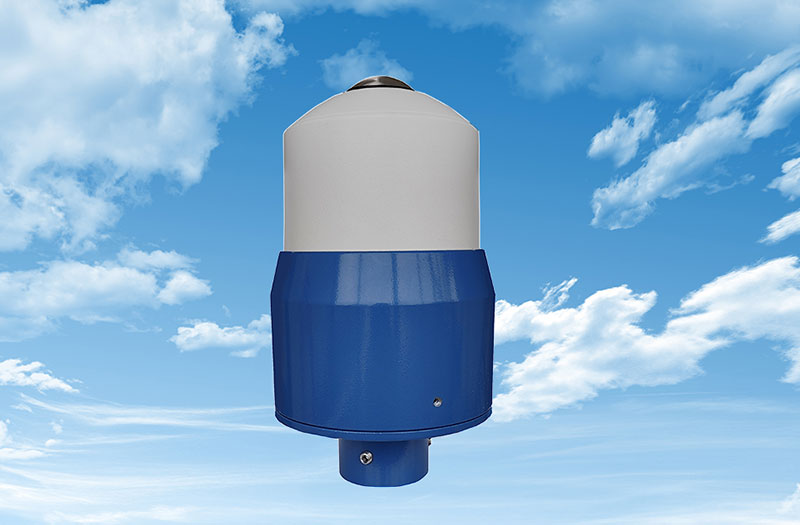
The QJ-JJ-3 Digital Snow Depth Sensor is a fully integrated monitoring device specifically designed for extreme environments, utilizing ultrasonic ranging technology to accurately measure snow depth and water level parameters. Equipped with a Type III anodized aluminum corrosion-resistant housing, IP67 protection rating, and 9–28 V DC wide voltage supply, it supports the RS485 Modbus RTU protocol. Its built-in ambient temperature sensor enables measurement compensation without requiring external accessories, ensuring long-term stable operation in harsh conditions ranging from –55°C to +85°C. The device continuously collects snow accumulation data from power stations and transmits it remotely to maintenance platforms, providing critical data support for snow removal scheduling and equipment protection.
III. Core Advantages
Precision non-contact monitoring: measurement error ≤ ±5 mm or ±0.2% FS (taking the higher value), resolution 0.1 mm, to avoid interference and damage to the equipment caused by contact-based measurements.
High environmental adaptability: resistant to cold and heat, corrosion and dust, suitable for extreme outdoor conditions in new energy power plants, and certified with multiple international compliance standards.
Intelligent and efficient operation and maintenance: Features built-in temperature compensation algorithms, automatic data calibration, remote data transmission, and network monitoring capabilities, significantly reducing manual inspection costs.
Easy and flexible installation: Compatible with various mounting methods including tripods and towers, featuring a beam angle of 22°, wide coverage without obstruction, and ensuring no interference with power station equipment operation.
Low-power stable operation: consumes only 0.2 W (peak 0.4 W), supports solar power, ideal for remote power stations without external power sources.
IV. Technical Solution Configuration
Core monitoring unit: one QJ-JJ-3 sensor host, equipped with an ultrasonic transceiver module and a temperature compensation unit.
Communication Module: Equipped with an RS485 communication interface, compatible with the Modbus RTU protocol, and supports seamless integration with power plant IoT platforms.
Power Supply Module: Features a wide-voltage power interface and is available with an optional solar power kit (including solar panels, controller, and battery).
Installation components: U-shaped bolt (M8×38 mm), hexagonally threaded screw (M5×16),5-meter dedicated cable, and mounting bracket.
Supplementary documents: one copy each of the product manual and certificate of conformity, including wiring and installation specification documentation.
V. Application Scenarios
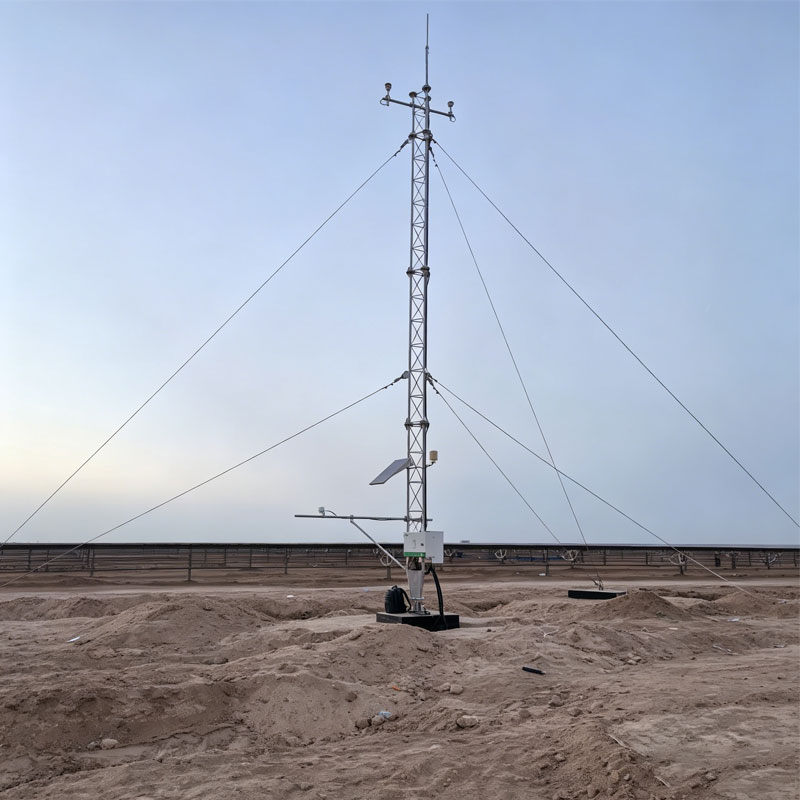
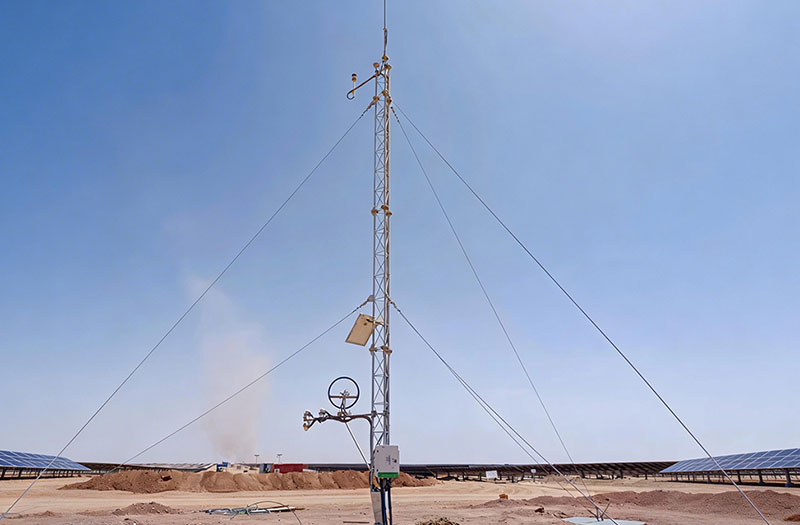
Wind farm: monitors snow depth around wind turbines, issues early warnings about the impact of excessive snow accumulation on blade rotation, and guides snow removal operations.
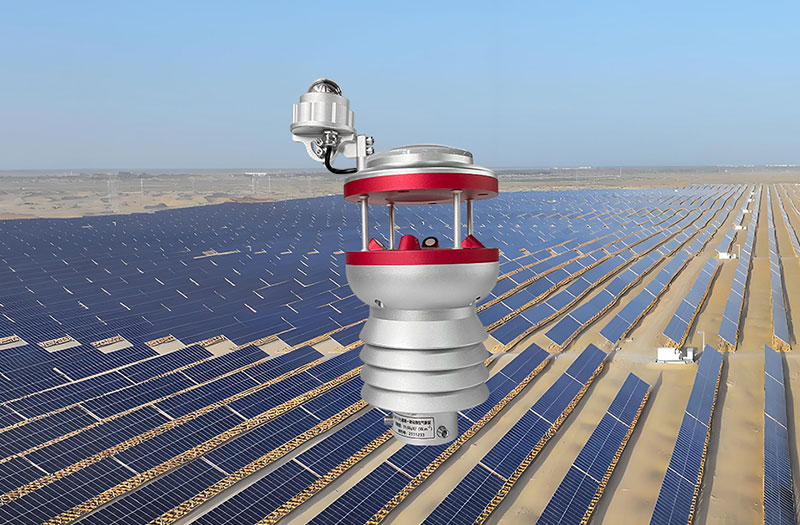
Photovoltaic power station: Monitor snow depth in module array areas, assess its impact on power generation, and prioritize snow removal efforts.
Transmission lines: Indirect monitoring of snow depth and ice coverage around power station transmission towers to alert against snow load risks on transmission lines.
Energy storage station: Monitoring snow accumulation in outdoor energy storage areas to prevent snow from collapsing protective structures.
VI. Implementation and Service Support
We provide specialized surveying services and scenario-specific installation solutions for new energy power stations, with a professional team responsible for equipment installation, commissioning, and platform integration. A 24/7 remote technical support service is available, complemented by regular equipment inspections and precision calibration. Comprehensive lifecycle warranties are offered, including firmware upgrades and replacement of corrosion-resistant components, ensuring long-term stable operation of the equipment in new energy power stations.