

 简体中文
简体中文
SR-SI Dust Soiling Measurement System Solution
- Date:12/05/2025/
- Source:
- Author:
Dust deposition is a critical factor affecting the power generation efficiency of photovoltaic power plants, not only reducing the light transmittance of PV modules and causing hot spot effects but also potentially corroding panels and shortening their lifespan, leading to power generation losses of up to 10%-30%. Traditional cleaning methods relying on visual inspection or periodic cleaning often suffer from issues such as inappropriate timing, cost inefficiency, or reduced effectiveness. The SR-SI Dust Soiling Measurement System, developed in accordance with the IEC 61724-2021 standard, scientifically quantifies dust contamination levels to provide precise decision-making support for cleaning operations, thereby balancing power generation efficiency with operational costs.
I. Project Background and Requirements
Dust deposition is a critical factor affecting the power generation efficiency of photovoltaic power plants, not only reducing the light transmittance of PV modules and causing hot spot effects but also potentially corroding panels and shortening their lifespan, leading to power generation losses of up to 10%-30%. Traditional cleaning methods relying on visual inspection or periodic cleaning often suffer from issues such as inappropriate timing, cost inefficiency, or reduced effectiveness. The SR-SI Dust Soiling Measurement System, developed in accordance with the IEC 61724-2021 standard, scientifically quantifies dust contamination levels to provide precise decision-making support for cleaning operations, thereby balancing power generation efficiency with operational costs.
II. System Overview
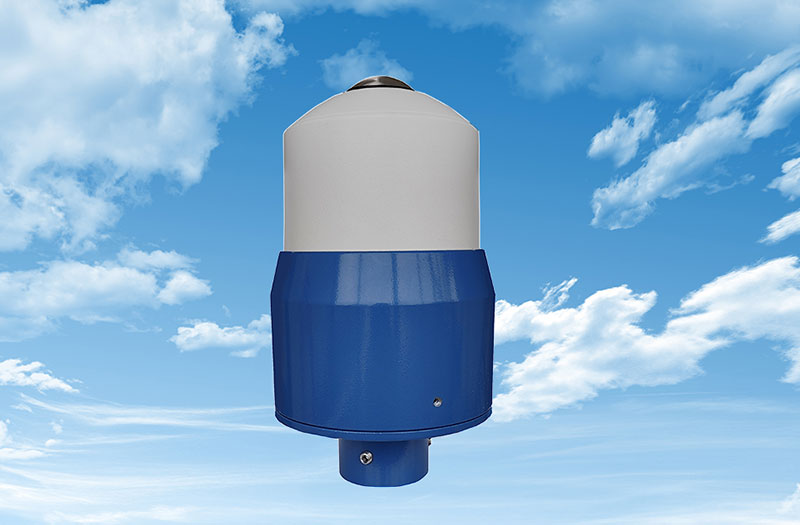
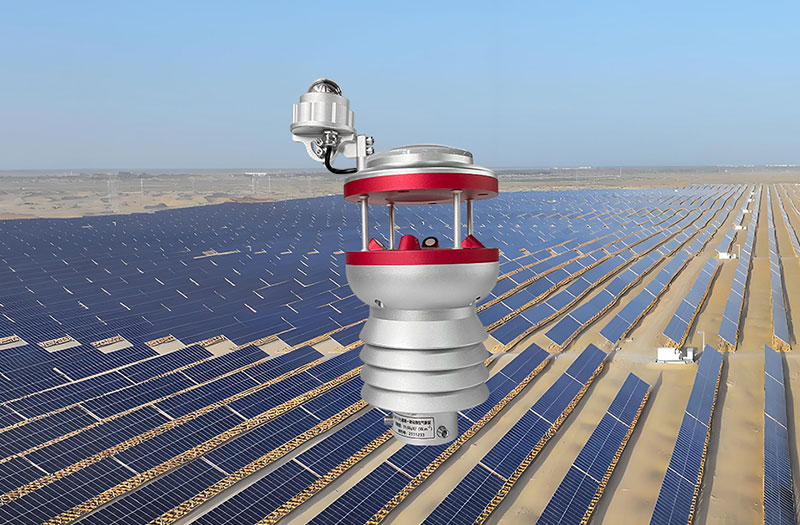
The SR-SI Dust Soiling Measurement System is a low-cost, high-precision device for monitoring photovoltaic pollution. It employs a dual-reference-cell design comprising a clean cell and a contaminated cell, measuring the short-circuit current and temperature of silicon-based standard cells to calculate the dust pollution index (SR value, ranging from 1% for completely clean surfaces to 0% for fully contaminated surfaces). The system's spectral response and tilt accuracy are precisely calibrated for various photovoltaic module configurations, making it suitable for diverse photovoltaic power plant applications. It enables 24-hour unattended monitoring and provides operational staff with scientific cleaning recommendations, preventing resource waste caused by improper operations.
III. Core Advantages
1.Precise quantification of pollution severity:
The system employs silicon-based sensors with a structure similar to photovoltaic modules, operating within a spectral range of 340–1190 nm and achieving a dust index accuracy of ±1%. By comparing the short-circuit currents between clean and contaminated units, it accurately reflects the module's contamination status. The data has been calibrated using indoor light sources and complies with the IEC 61724-2021 standard.
Intelligent Cleaning Decision Guidance:
The SR value provides real-time indication of component cleanliness (from 100% to 0%). Operators can develop cleaning schedules based on changes in the value without manual judgment—e.g., initiating cleaning when SR ≤ 80%—thereby balancing power generation efficiency with maintenance costs and enhancing plant profitability.
3.Strong environmental adaptability:
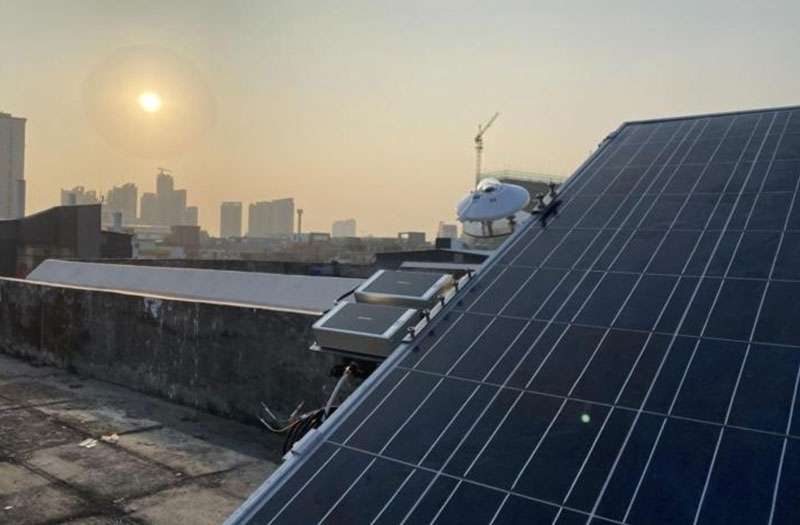
With an IP65 protection rating and operating temperature range of-35°C to 80°C, it is suitable for complex outdoor environments with high temperatures and humidity. Cable lengths are available (3 m or 20 m), allowing installation on photovoltaic mounting structures and enabling synchronized operation with power plant cleaning equipment for convenient maintenance.
4.Efficient Data Transmission and Integration:
Supports the MODBUS RS485 protocol, enabling integration with power plant SCADA systems or cloud platforms to upload real-time data such as SR values, irradiance, and module temperatures, facilitating remote monitoring and historical trend analysis.
IV. System Configuration and Working Principle
Core Components:
Dual reference cells: one clean cell (equipped with an optional self-cleaning system) and one contaminated cell, simulating the polluted state of photovoltaic modules.
Sensor module: Integrates irradiance and temperature monitoring functions to enable environmental parameter compensation;
Data Transmission Unit: uploads SR values and raw data to the management system via the RS485 interface.
Flow Of Work
The system continuously measures the short-circuit current in both clean and contaminated units, calculates the SR value using a temperature compensation algorithm, and triggers an alert when the SR value falls below a preset threshold to prompt maintenance personnel to perform cleaning procedures.
V. Application Scenarios
Large-scale ground-mounted photovoltaic power stations:
Distributed photovoltaic projects:
Photovoltaic Power Station Operation and Maintenance Evaluation:
VI. Service Guarantees
The system is certified under ISO 9001:2015 and offers a calibration cycle of up to 5 years (compliant with IEC 61724 requirements), supported by 24/7 technical assistance to ensure long-term stable operation.
The SR-SI system is centered on "scientific quantification and precise decision-making," offering a cost-effective solution for dust management in photovoltaic power plants to enhance power generation efficiency and return on investment.